




Decoupling Architecture: The Gust of Force of Your Salesforce ISV Partner App
Hey there!
Being a Salesforce ISV Partner, you have spent hundreds of hours developing an application that addresses real-life issues. However, with the expansion of your solution and the introduction of more external services (be it an ERP system, a marketing platform, or a payment gateway), things start to get unpredictably messy.
It may result in system fragility caused by continuous, straightforward, and back communication that is constant. Have you ever had the feeling that your entire application would collapse with one single hiccup outside of Salesforce? The archetypal tight coupling headache. It complicates the updates and makes scaling a nightmare. The good news? This can be rectified through a strategic expression: decoupling architecture.
What is the definition of decoupling architecture?
Consider it in such a manner that your application and the external service are two colleagues who typically converse directly. In one decoupled model, you place one translator/a message board between them.
This is so that your central Salesforce application does not require the actual technical specifics of the service on the other side; it simply sends a standardized message to the middle tier. Even this mere separation is highly resilient. When the external service temporarily goes offline, your app will continue to run normally and just buffer the messages until the service is online again. In the case of an up-to-date Salesforce ISV Partner solution, this resilience is not a bargaining point.
Preparation of External Services
The most important point when developing your app to be integrated with strong external services is the development of an abstraction layer. You ought to post an event instead of directly calling a trigger (horror of horrors!). In the Salesforce environment, this translates to the use of asynchronous capabilities such as Platform Events or the Queueable interface.
With these techniques, all your application does is publish the data it requires sending or request the data it requires. The actual communication and translation to the specific language of an external service is dealt with by a separate and dedicated process (or microservice). This is necessary, as it gives you unbelievable flexibility and lowers the cost of maintenance since you can replace one third-party service with another without having to rewrite the core application logic.
The Value of Partnership
True decoupling architecture is more of a strategic business step rather than just a technical undertaking. It will help in making your app resistant to the changing times and give your customers a superior experience over the long term, as well as open the door to faster feature development.
Whenever going through the process of working with complex architecture and integration patterns feels a little daunting, keep in mind that you are by no means alone. By partnering with a mature Salesforce Consulting Partner, it is possible to get the knowledge to design a clean and scalable solution on the first day. They focus on the transformation of complex needs to simple, elegant code that complies with Salesforce best practices. Need to understand professional advice on cloud computing and architecture design? Check out our services.
Decoupling is all about creating space: space between the systems, space to grow, and space for peace of mind. Embrace such an attitude, and you are bound to have your application prepared to meet any challenge that the future of integration may present. Happy building!
Who Are We?
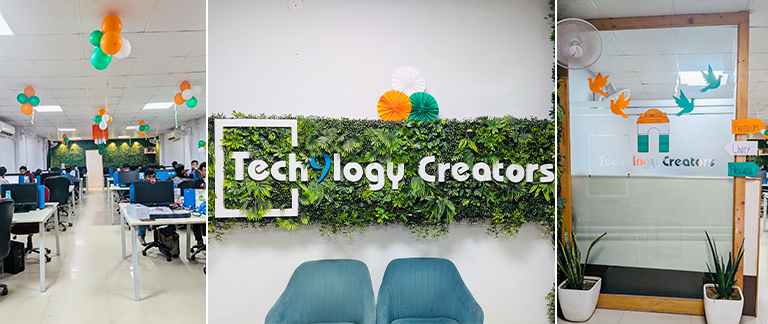
Tech9logy Creators is a Registered Salesforce ISV Partner and Consulting Partner Company with over 11+ years of experience. We have a certified team of 40+ developers with extensive knowledge about Salesforce AppExchange and provide you with the best-in-class personalized apps. Our dedicated Salesforce experts help you bring the best out of your CRM and ensure your business operates at its highest potential.
Contact us for more information.